Best Deshedding Tools 2026: What Actually Stops Shedding
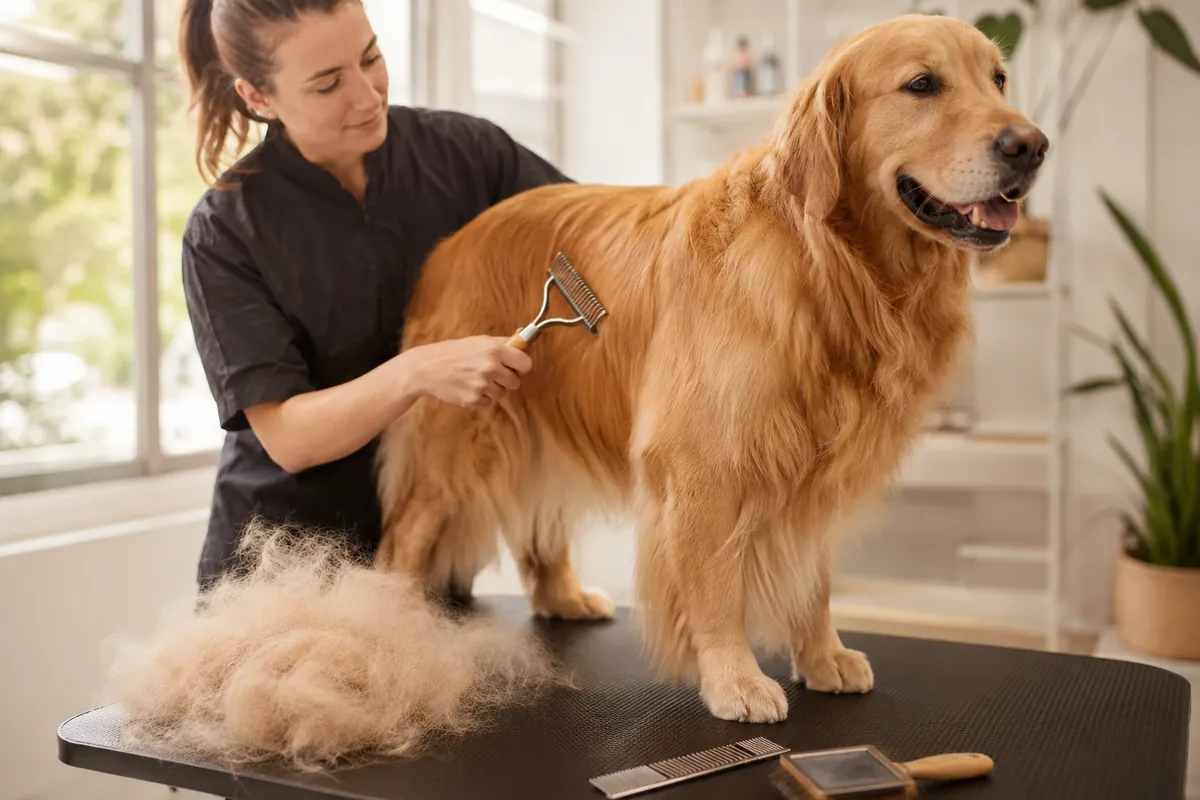
Best deshedding tool: for serious double-coat shedding the most effective tool is a high-velocity dog dryer that blows the loose undercoat out, backed up by an undercoat rake for daily home use, with a FURminator-style deshedding edge as a finisher used sparingly. No single brush beats moving air for getting a husky or golden through a coat blow.
I have spent 13 years up to my elbows in dog hair, and spring and fall coat-blowing season is when the deshedding questions pour in. People want the one magic brush. I am going to give you the honest hierarchy of what actually works, why blowing the coat out beats brushing it out, and how to avoid the very real damage you can do by over-deshedding.
If you are setting up a full home grooming kit, this pairs with my home grooming method, and if your dog's shedding is more than you want to handle, here is what a deshed at a groomer costs.
First, Understand the Coat You Are Fighting
You cannot pick the right tool without knowing the coat. There are two big categories:
- Double-coated breeds (huskies, malamutes, golden retrievers, German shepherds, corgis, Aussies, Pomeranians). They have a coarse outer guard coat and a soft, dense undercoat that blows out in clumps seasonally. This is where deshedding tools shine.
- Single-coated and curly breeds (poodles, doodles, Yorkies, Maltese). These dogs do not "blow coat" the same way. Their hair grows continuously and mats instead of shedding in clumps. Deshedding tools are largely the wrong tool here, you need brushing and clipping.
A critical safety note up front: do not shave a double-coated dog to deal with shedding. That undercoat insulates against both heat and cold, and shaving it can damage how it regrows and remove the dog's temperature regulation and sun protection. The American Veterinary Medical Association treats coat and skin health as part of routine pet wellness, and a healthy intact double coat is doing a real job. The answer to a double coat is deshedding, not clipping.
The Tool Hierarchy, Most to Least Effective
| Tool | What it does | Best for | Watch out for |
|---|---|---|---|
| High-velocity dryer | Blows loose undercoat out with air | Heavy double-coat blow-outs | Loud, needs intro for nervous dogs |
| Undercoat rake | Pulls dead undercoat from below the topcoat | Daily and weekly home use | Pressing too hard scratches skin |
| Deshedding blade (FURminator type) | Fine teeth grab loose undercoat hairs | Finishing after a rake | Easy to overdo, can damage coat |
| Slicker brush | Lifts and smooths topcoat | All coats, finishing | Does little for deep undercoat |
| Shedding "gloves" | Light surface hair | Cosmetic, low-shed dogs | Mostly a feel-good tool |
Why Blowing the Coat Beats Brushing
Here is the thing brushing-tool ads do not tell you. A high-velocity dryer pushes a column of air down to the skin and physically blasts the loose undercoat out of the coat in clouds. It reaches dead hair that a brush rides right over, and it does it without dragging metal teeth across the skin. After a bath, a high-velocity dog dryer will remove more undercoat in fifteen minutes than an hour of brushing, and it is gentler on the skin because nothing is scraping.
This is the single biggest upgrade a shedding-dog owner can make. It is loud and it is an investment, so introduce it slowly with treats and start on low away from the face. But on a husky in May, nothing else comes close. A variable-speed force dryer lets you start gentle for nervous dogs.
The Tools, Ranked for Home Use
Best Daily Tool: Undercoat Rake
For most owners of double-coated dogs, an undercoat rake is the workhorse. The long rounded pins reach under the guard coat and pull out the dead undercoat without stripping the healthy topcoat. Work in the direction of hair growth, in sections, with a light hand. Let the tool do the work, do not press. A rake plus a weekly habit keeps shedding manageable between baths.
For thicker or deeper coats, a coat king or stripping rake pulls even more, but it is more aggressive, so use a gentler hand and fewer passes.
The Famous One: FURminator and Deshedding Blades
The FURminator deshedding tool earned its reputation honestly. The fine stainless edge grabs loose undercoat impressively well, and the pile of hair it pulls is genuinely satisfying. But here is my professional caution, and it is important: a FURminator-style blade is a finishing tool, not a daily brush. The fine teeth are essentially a stripping edge, and overused or pressed hard, they can cut and thin the healthy topcoat and irritate the skin. Use it after the rake, a few light passes, not for twenty minutes pressing down. Respect it and it is great. Abuse it and you damage the coat.
Finishing: Slicker Brush
A good slicker brush smooths the topcoat and catches surface loose hair after the heavy lifting is done. It is not a deep-undercoat tool, but every kit needs one for the finish and for daily touch-ups.
Skip or Downgrade: Shedding Gloves and Cheap Combs
Deshedding gloves feel nice and the dog enjoys them, but they only get surface hair. Fine for a quick wipe-down or a dog that hates real tools, not a solution for a blowing coat. Treat them as a bonus, not a primary tool.
My Deshedding Routine, Start to Finish
People ask for a brush, but the real answer is a process. The clumps come out when the coat is clean, conditioned, and dry, not when you scrape a dirty coat with a metal tool. Here is the order I work in on a heavy shedder, and it is the same order you can use at home on a non-matted double coat.
- Brush out first. A few minutes with the rake to lift loose hair and make sure there are no mats, because you never bathe or blow out a matted coat (water and air both tighten mats).
- Bathe with a deshedding or conditioning shampoo. Clean hair releases. A deshedding dog shampoo loosens the dead undercoat so the dryer can do its job. Rinse until the water runs completely clear.
- Blow the coat out wet, then again as it dries. This is the magic step. The high-velocity dryer pushes the loosened undercoat out in sheets. Work in sections, keep the nozzle moving, never park it on one spot.
- Rake while you finish drying. The rake catches what the air loosens but does not carry away.
- Light finishing pass with the deshedding blade, only where loose undercoat remains, then a slicker over the top for the smooth final look.
Skip the bath and dryer and you are fighting the coat with brute force. Add them and the same dog sheds a fraction as much for weeks. That is the difference between a pro deshed and dragging a tool across a dry dog.
Breed-Specific Notes
- Huskies and malamutes: they blow coat hard twice a year. High-velocity dryer plus undercoat rake is the combo. Never shave them. Bathe, blow out, rake, finish.
- Golden retrievers and shepherds: rake regularly year-round, with bigger blow-outs seasonally. A dryer after baths transforms the result.
- Corgis and Aussies: dense undercoat for their size, same approach, rake plus dryer.
- Pomeranians and small double-coats: gentler tools, a smaller rake and slicker, careful around the delicate skin.
- Doodles, poodles, Yorkies (single/curly): deshedding tools are the wrong call. They need a slicker, a comb, and regular clipping to prevent matting, covered in my home grooming guide.
- Labs and short double-coats: a rubber curry or short-tooth tool plus the occasional dryer blow-out handles their seasonal shed.
Over-Deshedding: Real Damage You Can Do
I see coat damage from over-zealous deshedding more than people realize, so let me be direct about the signs and rules.
- Bald patches and broken topcoat come from pressing a FURminator-style blade too hard or using it too often. The undercoat should thin, the guard coat should not.
- Red, irritated, scratched skin means you are bearing down. These tools work with a light touch, not pressure.
- A dull, sparse-looking coat can result from stripping out so much that the protective layers are compromised.
My rules: rake regularly with a light hand, reserve the fine deshedding blade for finishing and only when there is loose undercoat to remove, never use any of these tools on bare or irritated skin, and never deshed a matted dog (work the mats out first, water and tools both make mats worse). When the coat is blown out and the rake stops pulling clumps, you are done. More is not better.
Frequently Asked Questions
What is the best deshedding tool for a husky or other double-coated dog?
For a serious double coat, the most effective tool is a high-velocity dog dryer that physically blows the loose undercoat out, backed up by an undercoat rake for in-between days. A FURminator-style deshedding blade is a light finisher, not your main tool. No single brush moves as much undercoat as moving air does on a coat-blowing husky.
Does a FURminator damage a dog's coat?
It can if you misuse it. A FURminator-style blade has a fine stripping edge, and pressing hard or using it for long sessions can cut and thin the healthy guard coat and irritate the skin. Used lightly as a finisher, only where there is loose undercoat to remove, it is a fine tool. The undercoat should thin out, the topcoat should not.
How often should I deshed my dog?
Rake a double coat regularly year-round with a light hand, then do bigger blow-outs during the spring and fall coat-blowing seasons. Reserve the fine deshedding blade for finishing, not daily use. When the rake stops pulling clumps and the coat looks blown out, you are done, more is not better.
Why should you never shave a double-coated dog to stop shedding?
The undercoat insulates the dog against both heat and cold and protects the skin from sun, and shaving it can change how the coat regrows. Shaving does not even stop the shedding, it just makes the shed hair shorter. Deshedding removes the dead undercoat while leaving the protective coat intact, which is what you actually want.
Do deshedding tools work on poodles and doodles?
No, those are the wrong tool for single-coated and curly breeds. Poodles, doodles, Yorkies, and Maltese do not blow coat in clumps, their hair grows continuously and mats instead. They need a slicker brush, a metal comb, and regular clipping, not an undercoat rake or deshedding blade.
Should I bathe my dog before or after deshedding?
Brush and rake out loose hair first to confirm there are no mats, then bathe with a deshedding or conditioning shampoo, then blow the coat out and rake as it dries. Clean, conditioned hair releases the dead undercoat far more easily than a dirty coat does. Never bathe or blow out a matted coat, since water and air both tighten mats.
My Honest Bottom Line
If you own a double-coated dog and you are serious about the hair, a high-velocity dryer is the best money you can spend, with an undercoat rake for the in-between days and a FURminator-style blade used lightly as a finisher. Skip the gloves as a primary tool, never shave the coat, and back off the moment the skin looks pink or the clumps stop coming.
And if coat-blowing season is just too much, a professional deshed treatment with a real force dryer will reset the coat in one visit. To find a groomer near you who offers it, check the PetGroomers.online directory, and if you groom professionally, you can get listed.