Best Dog Grooming Clippers 2026: What 13 Years Taught Me
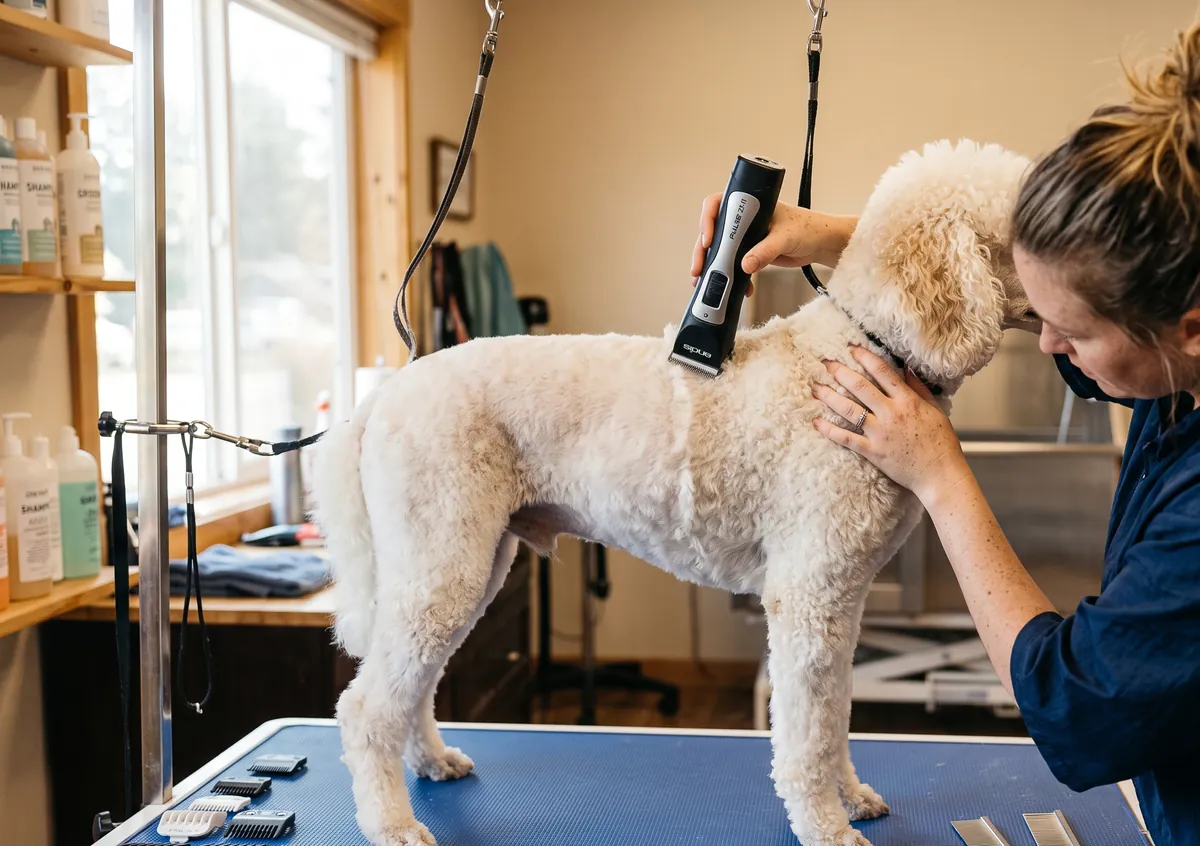
Best dog grooming clippers: for most home groomers and pros in 2026 the safe, durable answer is a detachable-blade A5-style clipper, and my short list is the Andis UltraEdge AGC2 (corded value), the Wahl KM10 (high-torque corded), the Andis Pulse ZR II (cordless workhorse), and the Wahl Bravura or Arco for small dogs and faces.
I have been grooming dogs and cats for 13 years, in two shops and out of a mobile van. I have clipped matted doodles that came in looking like dust mops, dematted huskies in August, and trimmed shaky little senior poodles who needed everything done in three short sittings. The clipper in your hand is the single tool that decides whether the dog has a calm afternoon or a bad one. So I take this question seriously, and I am not going to sell you the most expensive thing on the shelf just because it is shiny.
Below is what actually holds up on the table, what I steer beginners toward, and where people waste money. If you are also pricing out a full home setup, my guide to grooming a dog at home walks through the whole process around these clippers, and if you are weighing DIY against paying a pro, look at what dog grooming actually costs first.
The Two Clipper Families: Detachable Blade vs Adjustable Blade
Before brands, you need to understand the two systems, because picking the wrong one is the most common and most expensive mistake I see.
Detachable-blade clippers (the "A5" style) take blades that pop off and swap in seconds. Each blade is a fixed length: a #10, a #7F, a #4F, a #5F, and so on. This is the professional standard. You buy a clipper once and build a blade collection over time. Andis, Wahl, and Oster all make A5-compatible blades, and most of them interchange across these brands, which is wonderful for your wallet.
Adjustable-blade clippers use a single blade with a lever (often a 5-in-1 blade) that slides between roughly a #9 and a #40 cutting length. These live mostly in cordless trimmers like the Wahl Bravura and Arco. They are fantastic for faces, feet, and sanitary areas, less ideal as your only tool for a full body groom on a thick coat.
My honest take: buy one detachable-blade clipper as your main tool, and one small adjustable-blade trimmer for detail work. That two-tool combo handles 95 percent of dogs.
Corded vs Cordless: The Real Tradeoffs
Everyone wants cordless. I understand the appeal, I run cordless in the van constantly. But let me be straight about the tradeoffs.
| Factor | Corded | Cordless |
|---|---|---|
| Power under load | Constant, never sags | Strong models hold up, cheap ones bog down in dense coat |
| Run time | Unlimited | 60 to 120 min on good models, less as batteries age |
| Weight | Heavier with cord drag | Lighter, easier on the wrist |
| Best for | Thick double coats, all-day use, matting | Mobile work, fidgety dogs, faces and feet |
| Long-term cost | Lower, no battery to replace | Batteries degrade in 2 to 4 years |
For dense coats and dematting, corded torque wins. A clipper that bogs down and stalls in a thick doodle coat will pull hair, heat up, and scare the dog. If you are only ever going to groom one or two short-coated dogs, a quality cordless is plenty.
My Picks for 2026
Best Corded Workhorse: Wahl KM10 and Andis UltraEdge AGC2
The Wahl KM10 is a high-torque, two-speed corded clipper that simply does not quit. It powers through thick coats without stalling, which is exactly what you want when you hit a dense patch behind the ears on a husky. The constant-speed motor keeps cutting at the same rate whether you are on a thin belly or a thick ruff.
For a lower price with most of the capability, the Andis UltraEdge AGC2 is the clipper I have handed to more new groomers than any other. Two speed, takes every A5 blade, runs cool, lasts for years. If someone asked me for one corded clipper to start, it is this.
Best Cordless Workhorse: Andis Pulse ZR II
The Andis Pulse ZR II is my van clipper. It takes detachable A5 blades, the lithium-ion battery packs swap out so you can keep a charged spare, and it has the torque to do a real body clip, not just touch-ups. This is the one I trust for a full mobile groom away from an outlet.
Best for Small Dogs and Faces: Wahl Bravura and Arco
For small dogs, faces, feet, and sanitary trims, I reach for an adjustable 5-in-1 blade trimmer. The Wahl Bravura is quiet, lightweight, and the low vibration matters enormously for a nervous little dog. The Wahl Arco is similar and a favorite for cat-friendly quiet work. Quiet and light beats powerful for these jobs.
Best Budget Entry: Oster A5 Two-Speed
The Oster A5 two-speed is the old reliable. Heavier and louder than the newer Andis and Wahl bodies, but it is a tank, and it takes the same A5 blades. Plenty of shops still run twenty-year-old Oster A5s. If budget is tight and the dog is not noise-sensitive, this is honest value.
Blades: The Part Nobody Explains Properly
Your clipper is only as good as the blade on it. Here is the cheat sheet I wish someone had taped to my first kit.
| Blade | Leaves roughly | I use it for |
|---|---|---|
| #10 | 1/16 inch | Sanitary areas, belly, paw pads, close work |
| #7F | 1/8 inch | Short body clip, the most-used body blade |
| #5F | 1/4 inch | Medium body length, popular everyday length |
| #4F | 3/8 inch | Longer body length, gentler on the skin |
| #40 | Surgical | Vet prep only, never a body clip, cuts skin easily |
The "F" means finish, a closer-set tooth that leaves a smoother coat. For a comfortable, forgiving body clip on most dogs, a #5F or #4F is kind to the skin and hides minor unevenness. A good starter blade set is worth more than a fancier clipper:
Snap-on guard combs let one blade do several lengths. They are great for fluffy pet trims but they snag on any tangle, so they are useless on a matted coat.
Blade Heat and Maintenance: Where Dogs Get Hurt
This is the section that matters more than any brand. Clipper blades get hot. A #10 or #40 run for even a minute can climb high enough to give a dog a real burn, and the most common spot is the sanitary area and belly where the skin is thin and the dog cannot tell you it stings until it already does.
Here is my routine, every single groom:
- Touch the blade to the inside of my own wrist every 30 to 60 seconds. If it is too hot for me, it is too hot for the dog. Full stop.
- Keep a tin of cool-down spray and a spare blade so I can swap a hot blade and let it rest.
- Oil the blade often. A drop of clipper blade oil across the teeth every few minutes keeps it cutting cool and cutting clean. A dry blade is a hot blade and a pulling blade.
- Brush the hair out of the blade and use a blade wash or cool spray between dogs.
- Send dull blades out to be sharpened. A dull blade pulls and folds hair instead of cutting it, which heats up and hurts. Do not push a dull blade harder, that is how dogs get nicked.
A sharp, oiled, cool blade is safe and fast. A dull, dry, hot blade is the single biggest reason a dog starts fighting the groom. Clipper burn is a recognized grooming injury, and the American Veterinary Medical Association points owners to a vet for any skin irritation that does not settle, so blade-heat discipline is not optional.
Matting Safety: Read This Before You Touch a Matted Dog
I will say this plainly because I have seen the injuries. Never try to clip through a tight mat with a guard comb, and never bathe a matted dog before the mats come out (water shrinks and tightens mats into a felted shell). Mats sit right against the skin, and the skin underneath is often pulled up into the mat. Run a closed blade under a mat blind and you will cut the dog, sometimes badly.
If you must remove mats yourself:
- Use a short blade like a #10 or #7F, no guard comb.
- Work the blade flat and slow underneath the mat, lifting it away from the skin, not sawing into it.
- Keep the skin pulled taut and flat with your free hand so it cannot fold up into the blade.
- If the coat is pelted (matted solid to the skin all over), stop. That is a full-body short shave that a pro should do, and the dog may need sedation or careful handling.
Severely matted dogs, anxious dogs, and most doodles in full coat are honestly a pro's job. There is no shame in it. A safe groom by someone with the right table and restraint is cheaper than a vet visit for a clipper laceration.
Quick Picks by Dog Type
- Doodles and poodles (curly, mat-prone): corded high-torque clipper (Wahl KM10 or Andis AGC2), a #7F or #5F, plus a Bravura for the face. Brush and line-comb fully before you clip.
- Double coats (huskies, shepherds, goldens): do not shave them to the skin (the undercoat protects against heat and cold). Use deshedding tools and a high-velocity dryer instead of clipping the body.
- Small dogs (Yorkies, Shih Tzus, Maltese): a quiet cordless like the Bravura or Arco with a 5-in-1 blade does almost everything.
Frequently Asked Questions
What are the best dog grooming clippers for beginners?
For most beginners the best choice is a detachable-blade A5-style clipper, and the Andis UltraEdge AGC2 corded is the one I hand to new groomers most often. It is two-speed, runs cool, takes every A5 blade, and lasts for years. Add a quiet cordless trimmer like the Wahl Bravura for faces and feet and you can handle most dogs.
Are corded or cordless dog clippers better?
Corded clippers hold constant power and never sag, which makes them better for thick double coats, dematting, and all-day use. Cordless clippers are lighter and easier on the wrist and shine for mobile work, faces, and fidgety dogs, but cheaper models bog down in dense coats and batteries degrade in two to four years. Most setups want one good corded clipper plus a small cordless trimmer.
What clipper blade should I use for a full body groom?
For a comfortable, forgiving body clip on most dogs, a #5F (leaves about 1/4 inch) or #4F (about 3/8 inch) is kind to the skin and hides minor unevenness. A #10 is for sanitary areas and close work, and a #40 is surgical, for vet prep only, never a body clip. Snap-on guard combs let one blade do several lengths but they snag on any tangle.
Why do clipper blades get hot, and how do I prevent burning my dog?
Blades heat up from friction, and a #10 or #40 can climb high enough to burn a dog in about a minute, most often on the thin skin of the belly and sanitary area. Touch the blade to your own wrist every 30 to 60 seconds, and if it is too hot for you it is too hot for the dog. Oil the blade often, keep a spare to swap a hot one, and never push a dull blade since dull blades run hotter and pull hair.
Can I clip a matted dog at home?
Mats sit tight against the skin and the skin is often folded up into them, so running a blade under a tight mat blind is how dogs get cut. Never use a guard comb on mats and never bathe a matted dog first, since water tightens the felt. A pelted coat that is matted solid is a full-body short shave that a professional should do, sometimes with sedation.
How many clippers do I actually need to groom my own dog?
For most dogs, two tools cover it: one detachable-blade clipper for the body and one small adjustable-blade trimmer for faces, feet, and sanitary areas. That combo handles roughly 95 percent of dogs. Spend the rest of your budget on sharp blades, oil, and a spare blade rather than on a fancier clipper body.
My Honest Bottom Line
If you buy one clipper, make it the Andis UltraEdge AGC2 corded. Add a Wahl Bravura for faces and feet, build a blade collection starting with a #10 and a #5F, and buy oil and a spare blade before you buy anything fancy. Spend your money on sharp blades and good handling, not on the priciest body on the shelf.
And know your limit. A clean short-coated dog or a well-brushed pet trim is very doable at home. A pelted doodle, a thrashing rescue, or a double coat you are tempted to shave belongs with a professional. If you want to find one near you, the PetGroomers.online groomer directory lists vetted local groomers, and if you are a pro yourself, you can get listed. The clipper is just a tool. Safe hands are the real equipment.